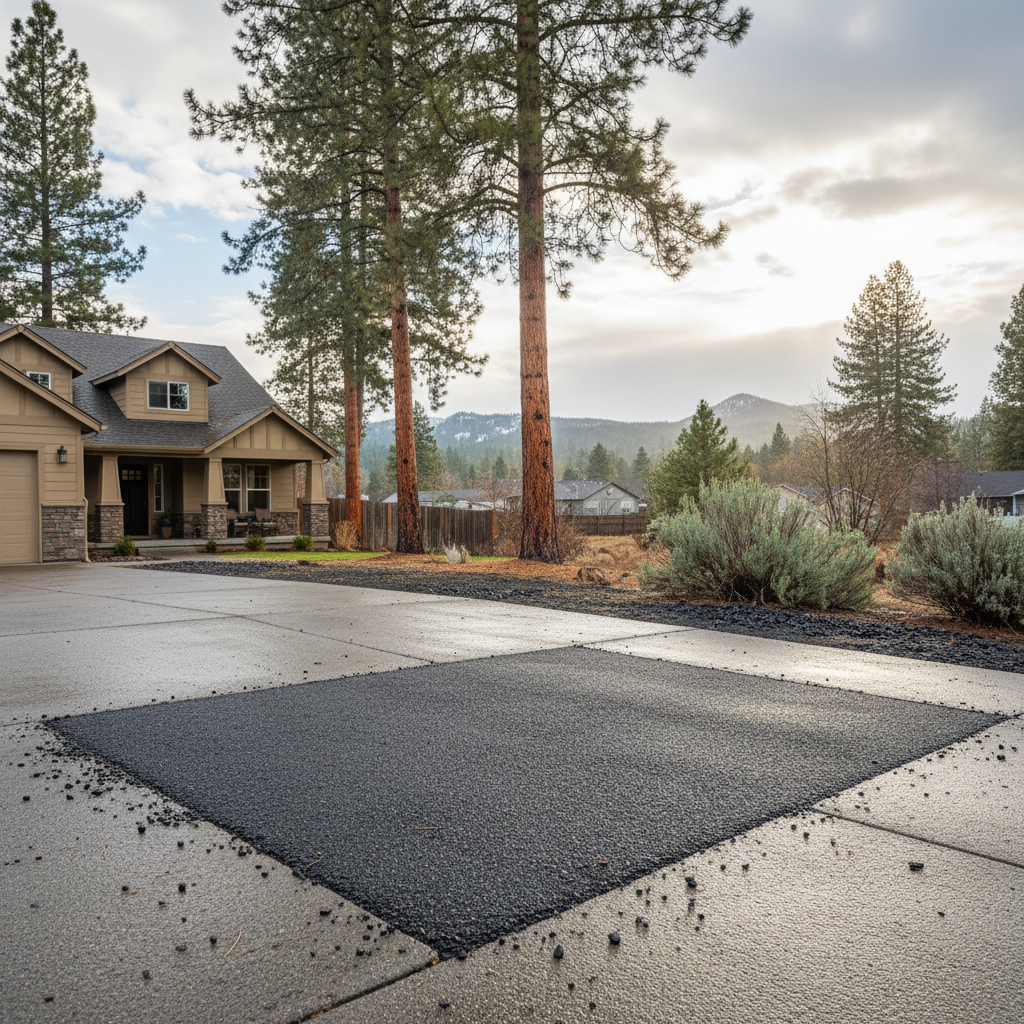
If you own a home or a business here in Klamath Falls, you know our weather is not always mild and consistent. Those hot, dry summers and freezing, snowy winters are hard on asphalt. When it comes to patching your driveway or parking lot, you cannot just call someone out whenever. You need to think about the seasons to get Asphalt Patching repairs that will last.
When to Schedule Your Asphalt Patching in Klamath Falls
Timing is a very important factor in how long your Asphalt Patching will last. You want conditions that let the new asphalt bond properly and cure without problems. Here is when to schedule your Asphalt Patching in Klamath Falls:
- Spring (Late Spring is Best): After winter's freeze-thaw cycles, you will often see new cracks and potholes. Spring is a good time to fix these with Asphalt Patching. The ground is thawed out, and temperatures are starting to get consistently warmer. You want to aim for when the daily temperatures are reliably above 50°F. This allows the asphalt to stay pliable and compact correctly, which is important for a strong Asphalt Patching repair. Early spring can still be a bit too wet and unpredictable, so waiting until late spring usually works better for Asphalt Patching.
- Summer: Summer is the best time for asphalt work. Hot weather helps the asphalt cure faster and stick better. We are talking about average daily highs in July hitting around 83°F here in Klamath Falls, so there is plenty of heat for Asphalt Patching. Just know that very hot weather can make the asphalt too soft, so sometimes scheduling Asphalt Patching work for cooler mornings or evenings is a good idea.
- Fall (Early Fall is Ideal): Just like late spring, early fall offers those mild temperatures that are perfect for Asphalt Patching. You are past the peak summer heat, but it is still warm enough for the asphalt to cure before the really cold weather starts. This is your last good chance to get those Asphalt Patching repairs done before winter hits and makes things much harder.
- Winter: Generally, you should avoid major Asphalt Patching in winter. Cold temperatures make the asphalt brittle and prevent proper curing and adhesion. Snow and ice just make it impossible to work effectively. If you have an emergency repair that absolutely cannot wait, temporary fixes might be an option, but they will not be as durable as proper Asphalt Patching.
Weather Conditions That Affect Asphalt Patching Work in Klamath Falls
It is not just the season; it is the daily conditions too. Here is what we look at for Asphalt Patching:
- Temperature: This is very important. Asphalt needs to be laid hot, around 275-300°F for hot mix asphalt, to compact and bond correctly. If it is too cold outside, the asphalt cools too fast. This leads to weak spots and a less durable Asphalt Patching repair. Most experts say do not pave if it is below 50°F.
- Moisture (Rain, Snow, Humidity): Rain is a big problem for Asphalt Patching. Even a light drizzle can mess with compaction and weaken the sealant's integrity. Water cools the asphalt too quickly, prevents proper bonding, and can even wash away important oils in the mix. Here in Klamath Falls, we get a good amount of rain in the wetter season, which typically runs from October to April. So, you have to watch the forecast closely for Asphalt Patching. High humidity can also slow down the curing process, though it is less of a problem than direct rain for Asphalt Patching.
- Ground Conditions: The ground needs to be dry and stable for Asphalt Patching. If the sub-base is wet or still frozen, your Asphalt Patching will not have a solid foundation, and it will fail faster.
Protecting Your Asphalt Investment Year-Round in Klamath Falls
Getting a good Asphalt Patching repair is only half the battle. You have to protect it, especially with our Klamath Falls climate. Those freeze-thaw cycles we get, where temperatures swing from below freezing to above, are known for turning small cracks into big potholes. Here is how to keep your asphalt strong in Klamath Falls:
- Sealcoating: We cannot stress this enough. Sealcoating every 2-3 years is one of the best ways to protect your asphalt. It puts a protective layer over the surface. This layer blocks UV rays, which oxidize the asphalt and make it brittle. It also prevents water from seeping into cracks, and it repels oil and gas. Sealcoating even helps the asphalt absorb heat better in winter, melting snow faster. The ideal time for Sealcoating in Klamath Falls is typically late spring through early fall. This is when temperatures are consistently above 50°F and there is no rain for at least 24 hours.
- Prompt Crack Filling: Do not let small cracks become big problems. Water is asphalt's worst enemy, and cracks are its entry points. Fill them quickly to prevent water from getting in, freezing, and expanding.
- Good Drainage: Make sure water is not pooling on your asphalt. Proper grading and drainage are important to direct water away from the pavement. This is especially important in areas like the Modoc Point neighborhood where some properties might have less-than-ideal natural drainage.
- Careful Snow Removal: When winter hits, use proper tools for snow removal. Metal plows and shovels can gouge and scrape your asphalt. Opt for rubber or plastic-edged tools, or even a snow blower, to be gentler on the surface.
- Regular Inspections: Just keep an eye on things. Walk your property a few times a year, especially after winter, and look for any new damage. Catching issues early saves you money and hassle in the long run.
Summit Asphalt Inc knows the ins and outs of keeping pavement in top shape in Klamath Falls. We are always happy to talk through your specific situation and make sure your asphalt investment lasts in Klamath Falls.