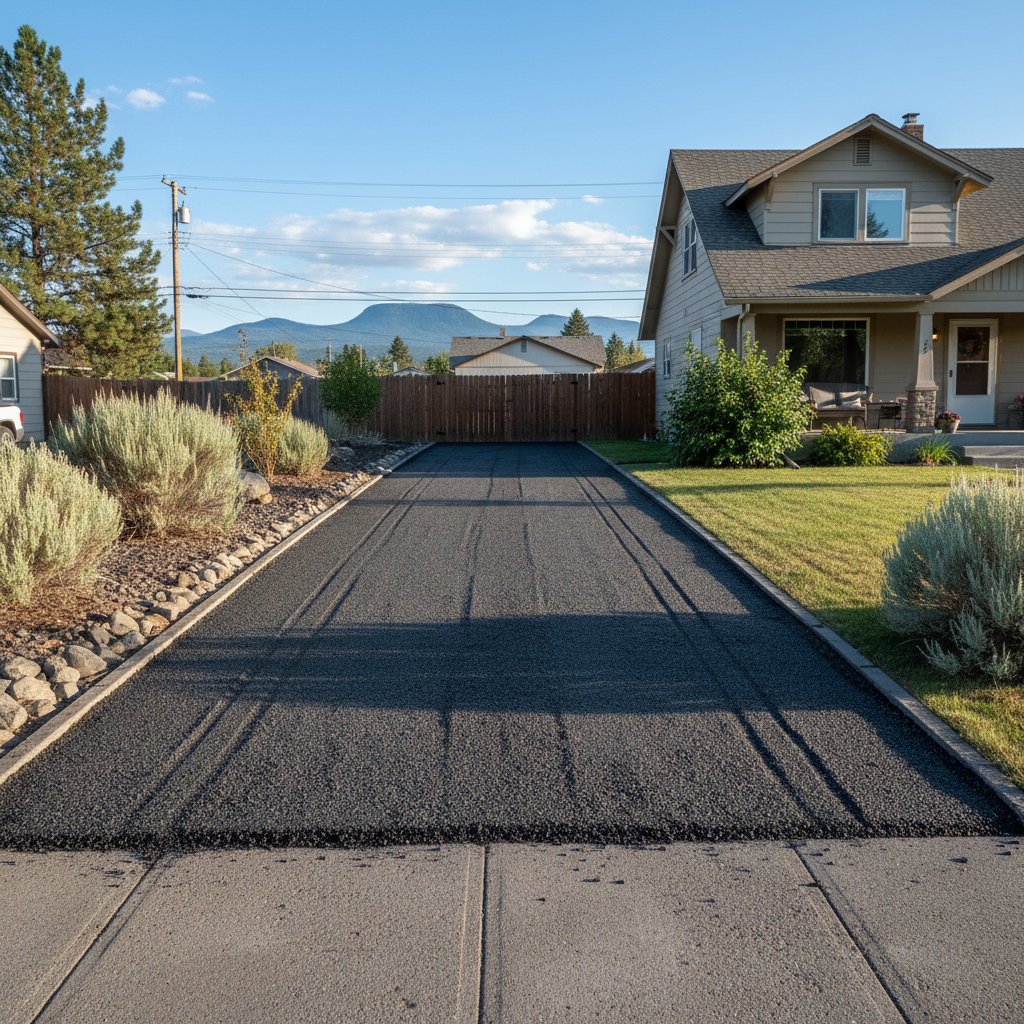
Alright, let's talk about asphalt milling. If you've got a parking lot, a long driveway, or even a private road that's seen better days, milling might be exactly what you need before we lay down a fresh layer of asphalt. We're not just slapping new pavement over old cracks, you know? It's about building a solid, stable base for a surface that'll actually last. So, what's this whole process actually going to cost you here in Klamath Falls?
What Exactly Is Asphalt Milling?
Simply put, milling is like shaving off the top layer of your existing asphalt. We use special machines with big rotating drums to grind up the old pavement to a specific depth. This leaves a fresh, level surface, perfectly ready for new asphalt. It's a fantastic way to fix problems like deep ruts, widespread cracking, or even to adjust drainage without having to completely rip out and replace the whole thing. Plus, that milled material — we call it RAP, for Recycled Asphalt Pavement — can often be reused. That's good for the environment, and sometimes it can even save you a little cash on materials.
What Makes the Price Go Up or Down?
You won't find a single, fixed price for milling. A few key factors really push the numbers around:
- Project Size: This is the big one. The more square footage we're milling, the more efficient our work becomes. A small patch job will naturally have a higher per-square-foot cost than a massive parking lot.
- Milling Depth: Are we just taking off an inch or two, or are we going down four, six, or even eight inches? Deeper milling means more machine time, more wear and tear on our equipment, and a lot more material to haul away.
- Accessibility & Site Conditions: Is it a wide-open parking lot, or a tight, winding driveway with trees and other obstacles? Easy access means we can work faster. If we're on a steep incline, like some of those roads up near Running Y Ranch, that's definitely tougher than a flat commercial lot. Oh, and if there are a lot of utility covers, manholes, or drains to work around, that always slows things down.
- Material Hauling & Disposal: What happens to all that milled asphalt? We have to load it up and haul it away, right? The distance to the disposal or recycling facility, plus any fees they charge there, will definitely factor into your quote.
- Prep Work & Cleanup: Sometimes there's existing debris or overgrown vegetation that needs clearing before we even start. And after milling, there's always some cleanup to make sure the site looks tidy.
Typical Cost Ranges in Klamath Falls
Okay, let's get to some actual numbers. Remember, these are rough estimates for our area, but they should give you a decent ballpark idea. These prices usually cover the milling itself, loading up the material, and hauling it away.
- Small Projects (under 5,000 sq ft): Think a decent-sized residential driveway or a small commercial entrance. You're probably looking at $0.90 to $1.50 per square foot. The smaller the job, the higher that per-square-foot cost gets, mostly because of mobilization fees.
- Medium Projects (5,000 to 20,000 sq ft): This covers most commercial parking lots or larger private roads. Here, our efficiency really kicks in, and you'll likely see prices in the range of $0.60 to $0.90 per square foot.
- Large Projects (over 20,000 sq ft): Big box store parking lots, industrial complexes — these can get down to $0.40 to $0.60 per square foot, sometimes even a bit lower for truly massive jobs with ideal conditions.
So, for a 10,000 square foot parking lot, you might be looking at anywhere from $6,000 to $9,000 for just the milling part. Keep in mind, this doesn't include the cost of laying new asphalt.
What Should Your Quote Include?
When you get a quote from Summit Asphalt Inc. or any other reputable contractor, make sure it's crystal clear. It should spell out:
- Total Square Footage: The exact area they'll mill.
- Milling Depth: How many inches they plan to remove.
- Inclusion of Hauling & Disposal: Confirm that taking away the milled material is part of the price. You really don't want a surprise bill for that later, trust me.
- Mobilization Fees: This covers getting the equipment to and from your site. It's usually a flat fee, or it's just built into the per-square-foot cost.
- Timeline: An estimated start and completion date.
- Payment Terms: When payments are due.
How to Avoid Overpaying
Nobody wants to get ripped off, right? Here's what I always recommend:
- Get Multiple Bids: Always get at least three quotes. It helps you compare not just the price, but also what each contractor includes in their service.
- Ask for References: A good contractor will have no problem providing them. Talk to other property owners they've worked for.
- Understand the Scope: Make sure every quote is for the exact same work. If one quote is significantly lower, you need to find out why. Maybe they're only milling half the depth, or they're not including the hauling.
- Check Licenses and Insurance: This is non-negotiable. Protect yourself and your property.
- Don't Rush: Take your time to review the quotes and ask questions. A contractor pressuring you for an immediate decision? That's usually a red flag.
Milling is a crucial step for a long-lasting pavement repair or overlay. Done right, it saves you money in the long run by giving your new asphalt a much better foundation. If you've got questions about a project in Klamath Falls, give us a call at Summit Asphalt Inc. We're happy to walk you through it.